- Home
- Top Sarawak Attractions
- Siniawan Old Town and Night Market
Siniawan Old Town and Night Market
Pasar Malam Pekan Siniawan
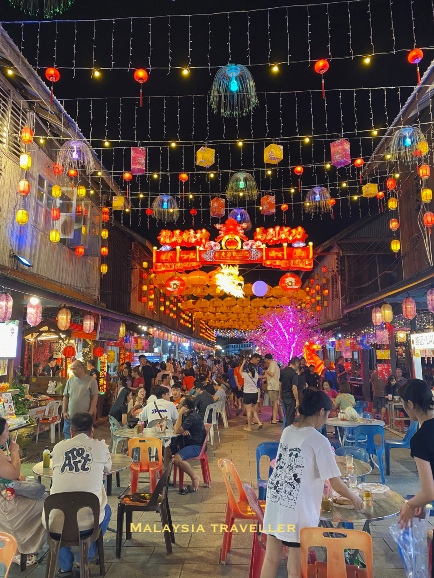
Siniawan Old Town and Night Market is a must-visit spot for street food and vintage architecture within east reach of Kuching.
Siniawan is a small heritage village near Bau with a population of 3,600 according to Wikipedia, mostly made up of Bidayuh and Chinese (Hakka) families and a smaller number of Malays.
The historic village is comprised of a few rows of wooden shophouses of a sort seldom still found in Malaysia. During the quiet of the day it almost has the feel of a Wild West town and you could imagine tumbleweed blowing down the street and sheriffs having shootouts with outlaws. But at night it transforms itself (Spirited Away style!) into a vibrant street food area decorated with colourful lanterns and filled with hungry and happy visitors.
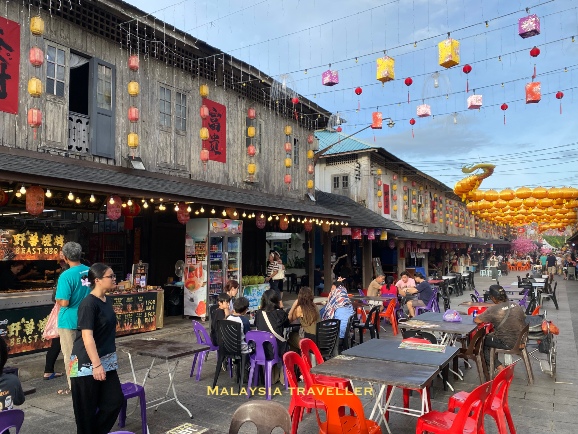
History of Siniawan Old Town and Night Market
Siniawan has something of a colourful history. Dating back to 1840 it served as a trading post for the nearby gold and antimony mining area surrounding Bau during the boom mining years. Before the area had any roads everything had to be transported by river and Siniawan was one of the closest points to Bau with a jetty on the Sarawak River. As well as supplying Bau with vital provisions, the village catered to the miners' vices with gambling, opium dens and brothels. In 1857 the Chinese miners launched a failed rebellion against Rajah James Brooke and the village suffered in the subsequent reprisals.
The village was rebuilt and most of the wooden shophouses we see today are from the 1910s. The village went into decline again due to WW2, the ceasing of mining operations in Bau and the opening of new roads bypassing Siniawan. In addition, Siniawan is prone to periodic flooding. Following a particularly catastrophic flood in 2004 the wise village leaders settled on a plan in 2009 to revive their fortunes by making the most of its rustic charm and introducing the weekend Night Market.
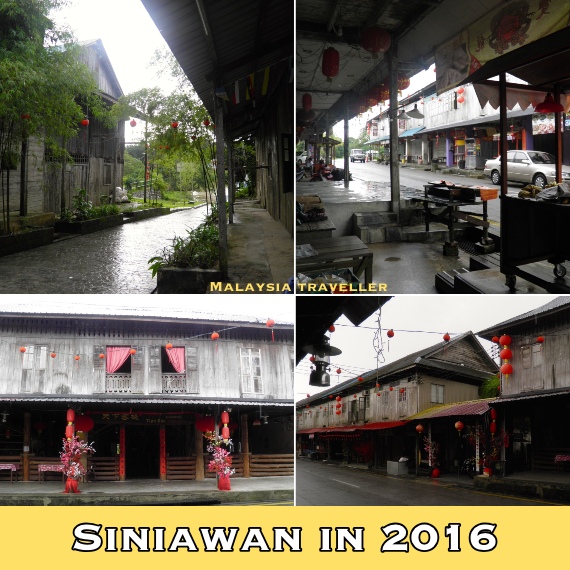
I first visited Siniawan in 2016 during the daytime. The Night Market was already in existence but it appears to have improved a lot in colour and vibrancy over the past decade.
Street Food
Although it is called a Night Market the main attraction of the village is food and there is not much in the way of shopping.
At night alfresco tables appear on the main street for visitors to enjoy the delights on offer. A wide variety of dishes are available and favourites include bamboo chicken, Taiwanese sausages, crispy oyster omelette, satay, noodles of various varieties, ice kacang, coffee and pastries, handmade ice creams, rojak, dumplings and roast pork. A local Bidayuh specialty is rice cooked and served in pitcher plants. Aren't pitcher plants supposed to be a protected species in Sarawak?
Muslim visitors often ask whether Halal food is available in Siniawan. From my observation it appears to be mostly non-halal but the nearby Premier Food Republic food court definitely has Muslim-friendly menus.
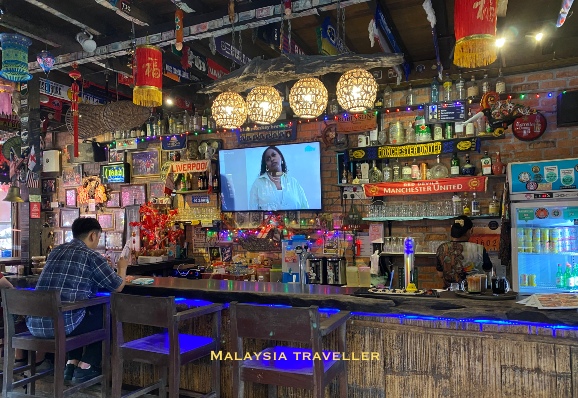 The Bikalan
One popular watering hole is the Bikalan pub and restaurant which is run by a friendly English and Bidayuh couple. It opens every day except Monday from 3 or 4pm to midnight. Live music is often performed here which can be enjoyed by everyone in the street outside. Siniawan is a 45 minute drive from downtown Kuching so if you are planning to drink alcohol and stay late at the Bikalan it is worth checking-in to the Roxy Hotel Siniawan which is just a short walk away (or bring a non-drinking driver)!
Siniawan Night Market Opening Hours
The liveliest times to visit Siniawan are weekends - Friday, Saturday & Sunday from 6pm till midnight.
A few places, such as the Bikalan, are open throughout the week (Bikalan is closed on Mondays).
Annual Events
Chinese New Year and the Christmas period are of course very popular times to visit Siniawan.
In addition there are the annual Chap Goh Meh celebrations around March with a procession in honour of Guanyin featuring lion and dragon dance performances, colourful lanterns and lots of firecrackers.
Another highlight of the local calendar is the Siniawan Country Music Festival in September (also known as the Siniawan Cowboy-style Oktoberfest).
Other Attractions
The Shui Yue Gong temple is worth a visit and is the focal point for the Chap Goh Mei procession.
How To Get to Siniawan Old Town and Night Market
The location is shown on this map.
Parking
There are large parking areas at the entrance to the village and more spaces behind the village next to the river.
Nearby Attractions
- Home
- Top Sarawak Attractions
- Siniawan Old Town and Night Market
Share this page:
AUTHOR BIO

David (the one on the left) is the writer behind Malaysia Traveller, sharing first-hand travel advice from over five decades of living and travelling across Asia and the Middle East. Based in Malaysia since 2009 and now in Kuching, he has published over 790 pages on this website, personally visited every place he covers, and uses only his own photos. Readers can learn more on his About Me page. He also shares updates on Facebook and YouTube. He loves uncovering overlooked places that even some Malaysians have never visited.
Recent Articles


-
Sematan Beach and Sematan Village, Lundu, Sarawak
Sep 03, 26 11:16 PM
 Sematan Beach and Sematan Village is an attractive coastal area within easy reach of Kuching. Here is what you can expect.
 -
Gunung Gading National Park - Rafflesia, Waterfalls and Hiking
Sep 01, 26 01:28 AM
 Enjoy a hike at the pristine Gunung Gading National Park and maybe catch a glimpse of its star attraction, the rare Rafflesia flower in bloom.
 -
Siar Beach - Beautiful Beach Near Lundu, Sarawak
Aug 13, 26 03:04 AM
 The width of Siar Beach varies enormously between high and low tides meaning you have to walk a long way to reach the sea at low tide.



Getting Around
- Free KL City Bus
- KL Hop-On Hop-Off
- BAS.MY Kuching
- BRT Sunway Line
- Malaysia By Coach
- Malaysia By Train
- Pangkor Ferry
- Marina Island Ferry
- Penang to Langkawi Ferry
- Visa Requirements
Hotels
- Pet Friendly Hotels
- Majestic Hotel KL
- Hotels in Melaka
- Hotels in Penang
- Hotels in Putrajaya
- Port Dickson Resorts
Great Malaysian Railway Journeys

CONTACT ME | PRIVACY POLICY | TRAVEL BLOG
Trusted By Over 13 Million Unique Visitors Since 2011. Over 36 Million Page Visits. Statistics up to end August 2026.